
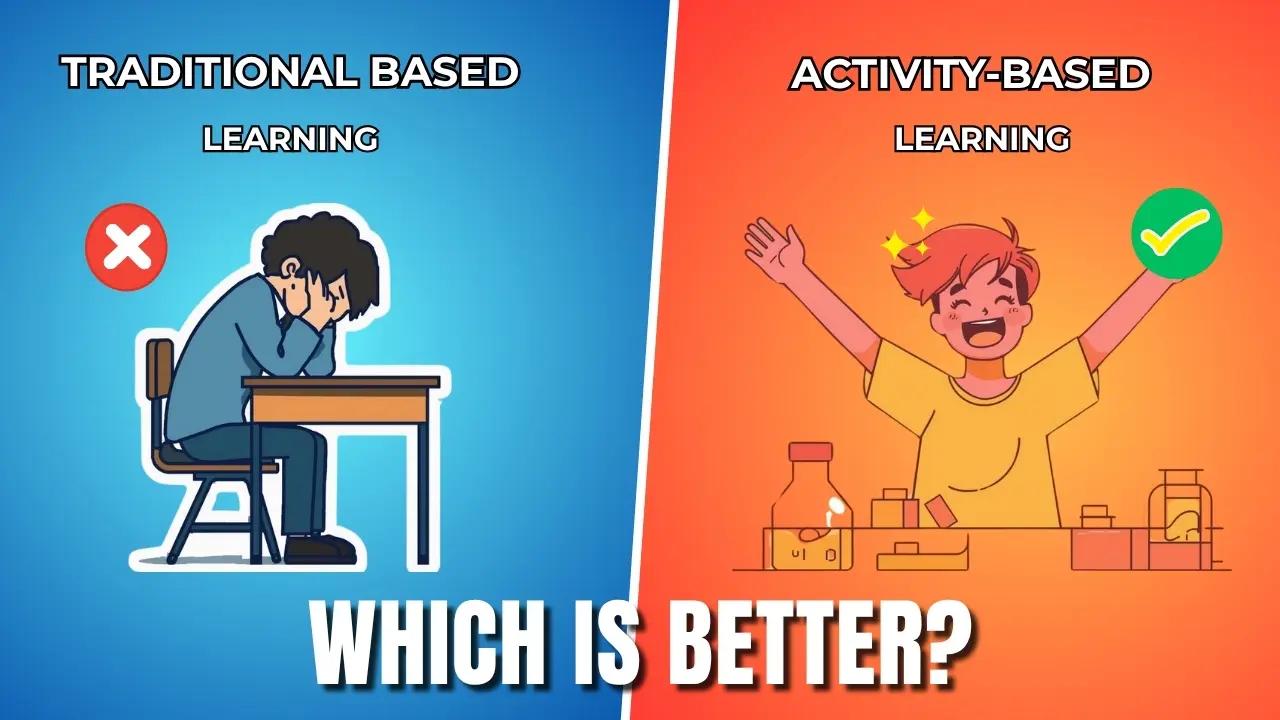
Education has evolved significantly over the years, moving beyond textbooks and memorization toward more interactive and meaningful learning experiences. Today, parents and educators often compare two major teaching approaches: activity-based learning and traditional learning. Both methods aim to educate children effectively, but they differ greatly in teaching style, classroom environment, and learning outcomes.
Understanding the differences between these approaches can help parents choose the right educational environment that supports their child’s growth, curiosity, and future success.
Understanding Traditional Learning
Traditional learning is the conventional teaching method followed in many schools for decades. In this approach, teachers deliver lessons through lectures, textbooks, written assignments, and examinations. Students mainly learn by listening, reading, memorizing, and reproducing information during tests.
This system provides a structured learning environment where subjects are taught according to a fixed syllabus and schedule. Traditional classrooms focus heavily on discipline, academic performance, and standardized assessments.
One of the biggest advantages of traditional learning is that it builds a strong theoretical foundation. Students gain subject knowledge systematically and prepare well for competitive exams. However, this approach may sometimes limit creativity, curiosity, and practical application of concepts.
What is Activity-Based Learning?
Activity-based learning is a modern teaching method where students actively participate in the learning process through hands-on activities, experiments, group discussions, storytelling, projects, and real-world problem-solving.
Instead of simply memorizing information, children learn by doing. This method encourages exploration, observation, and interaction, making lessons more engaging and enjoyable.
Activity-based learning improves student engagement because children are directly involved in classroom activities rather than passively listening to lectures. It creates a dynamic environment where students feel motivated to ask questions, express ideas, and collaborate with others.
This approach also strengthens critical thinking skills by encouraging students to analyze situations, solve problems, and think independently. Rather than focusing only on marks, activity-based education helps children understand concepts deeply and apply them in real-life situations.
How Activity-Based Learning Supports Concept Clarity
Modern education increasingly focuses on concept-based learning, where students understand the “why” behind every topic instead of memorizing answers. Activity-based learning supports this beautifully through practical experiences.
For example, instead of only reading about plants in a textbook, students may grow small plants themselves and observe the growth process. Similarly, mathematical concepts can be taught using games, puzzles, and visual tools that make learning interactive and memorable.
When children participate actively in lessons, they retain information better and develop a genuine interest in learning. This practical approach makes education more meaningful and helps students become confident learners.
Comparing Activity-Based Learning and Traditional Learning
Both learning methods have their strengths, and the better approach often depends on the child’s personality and learning style.
Traditional learning works well for students who prefer structure, discipline, and clear academic guidance. It is effective for theoretical subjects and exam preparation where detailed syllabus coverage is important.
On the other hand, activity-based learning benefits children who learn better through interaction, creativity, and practical experiences. It develops communication abilities, teamwork, leadership qualities, and problem-solving skills alongside academics.
Unlike traditional classrooms that mainly focus on teacher-led instruction, activity-based classrooms encourage active participation and independent exploration. This creates a more balanced learning experience that nurtures both academic and personal development.
Why Schools Are Moving Toward Activity-Based Education
With changing educational needs, many schools in India are gradually integrating experiential and interactive teaching methods into their curriculum. Parents today look for schools that focus not only on marks but also on creativity, communication, emotional intelligence, and future-ready skills.
As industries and careers continue to evolve, children need more than textbook knowledge to succeed. They must be adaptable, innovative, and confident thinkers. Activity-based learning helps develop these abilities from an early age.
Many educators now believe that combining traditional academic foundations with experiential learning creates the most effective educational environment. This balanced approach allows students to gain subject knowledge while also building practical life skills.
Parents searching for the Best School in Kondapur Offering Activity-Based Learning often prioritize institutions that create engaging classrooms, personalized learning experiences, and opportunities for holistic development.
Which Learning Method is Better for Your Child?
There is no single answer to this question because every child learns differently. Some children excel in structured academic environments, while others thrive when given opportunities to explore and experiment.
The ideal educational approach is one that balances academics with creativity, practical exposure, and emotional growth. Schools that integrate activity-based learning into their teaching methods often create more engaging and stress-free learning environments for children.
A child’s education should not only prepare them for exams but also help them become curious learners, confident communicators, and independent thinkers.
Creating Future-Ready Learners Through Meaningful Education
In today’s fast-changing world, education must go beyond memorization and rote learning. While traditional learning continues to provide strong academic discipline, activity-based learning introduces creativity, innovation, and deeper understanding into the classroom.
At Ieken Future School, the focus is on creating a balanced educational experience where children enjoy learning while developing essential life skills. Through interactive teaching methods, concept-driven education, and engaging classroom activities, students are encouraged to think independently, participate actively, and grow with confidence.
By nurturing curiosity, creativity, and critical thinking skills, the school helps children become future-ready learners equipped to succeed academically and personally in an ever-evolving world.