
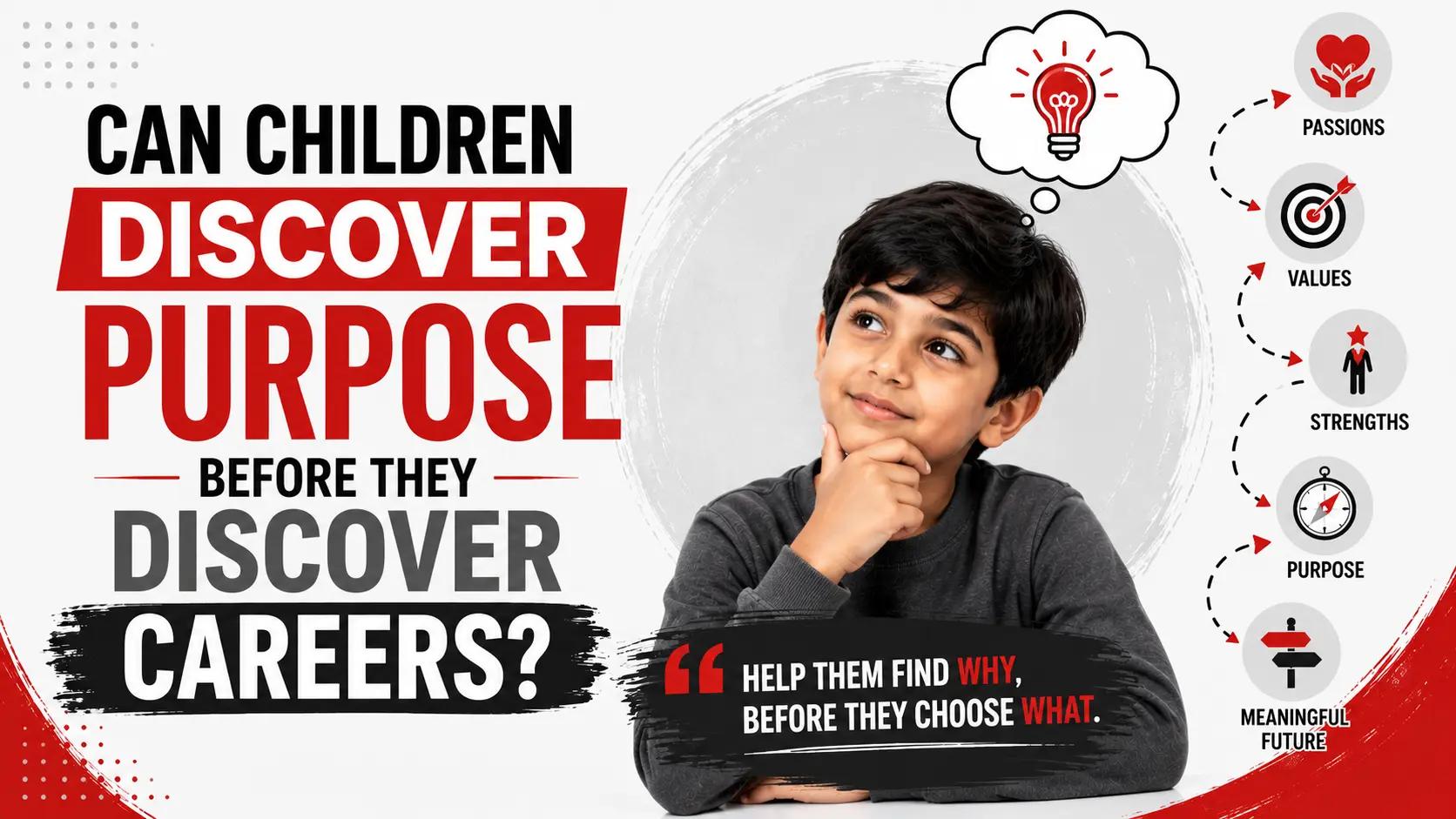
In a rapidly changing world, children are often encouraged to think about future careers from an early age. However, before asking “What do you want to become?”, it may be more meaningful to ask, “What do you care about, and what gives your learning a sense of purpose?” Discovering purpose in childhood is not about choosing a profession early. It is about helping children understand their interests, values, strengths, and the ways they can contribute to the world.
What Does Purpose Mean for Children?
For children, purpose can begin with simple experiences. A child who enjoys helping classmates may discover the value of empathy and teamwork. Another who loves building things may develop an interest in creativity, problem-solving, or innovation. These experiences help children understand themselves before they need to make important career choices.
This is why purpose-driven education focuses on developing self-awareness alongside academic knowledge. Instead of limiting learning to textbooks and examinations, children get opportunities to explore questions, experiment with ideas, solve problems, and reflect on what they enjoy.
Why Purpose Can Come Before Career Choices
Careers are constantly evolving. Many of the jobs children will enter in the future may look very different from today’s professions. Therefore, future-ready education should not focus only on preparing students for a particular career. It should build transferable skills that remain valuable across different career paths.
Skills such as critical thinking, creativity, communication, collaboration, problem-solving, adaptability, and emotional intelligence can help children navigate an uncertain future. When students understand their strengths and interests, they can make more confident academic and career decisions later in life.
How Schools Can Help Children Discover Purpose
Schools play an important role in creating an environment where children can explore their potential. Activity-based learning, project-based activities, sports, arts, teamwork, discussions, and real-world problem-solving can help students discover what motivates them.
Teachers can also encourage children to ask questions rather than simply search for correct answers. When students are given the freedom to explore different subjects and express their ideas, they begin developing self-confidence and independent thinking.
For example, a classroom project about environmental conservation could introduce students to science, sustainability, teamwork, leadership, and community responsibility. The goal is not to decide whether a child should become a scientist or environmentalist, but to help them discover what kind of problems they enjoy solving.
Parents Can Support Purpose Without Pressure
Parents can support this journey by observing children's natural interests and giving them space to explore. Instead of repeatedly asking about future careers, conversations can focus on questions such as, “What did you enjoy learning today?” “What problem would you like to solve?”, or “What are you curious about?”
These conversations help children connect learning with meaning and gradually develop a stronger understanding of themselves.
Building Purpose Before Predicting the Future
Children do not need to know their careers before they understand their purpose. When education nurtures curiosity, values, strengths, creativity, and a desire to make a difference, career choices can eventually grow from a deeper foundation.
Empowering Children to Learn With Purpose
At Ieken Future School, learning can be viewed as more than preparation for examinations or future professions. Through meaningful experiences, interactive learning, creativity, and opportunities for independent thinking, children can explore their strengths while developing the confidence to understand what matters to them. By encouraging curiosity, character, and real-world learning, the educational journey helps children become future-ready learners who can pursue careers with purpose, confidence, and responsibility.