
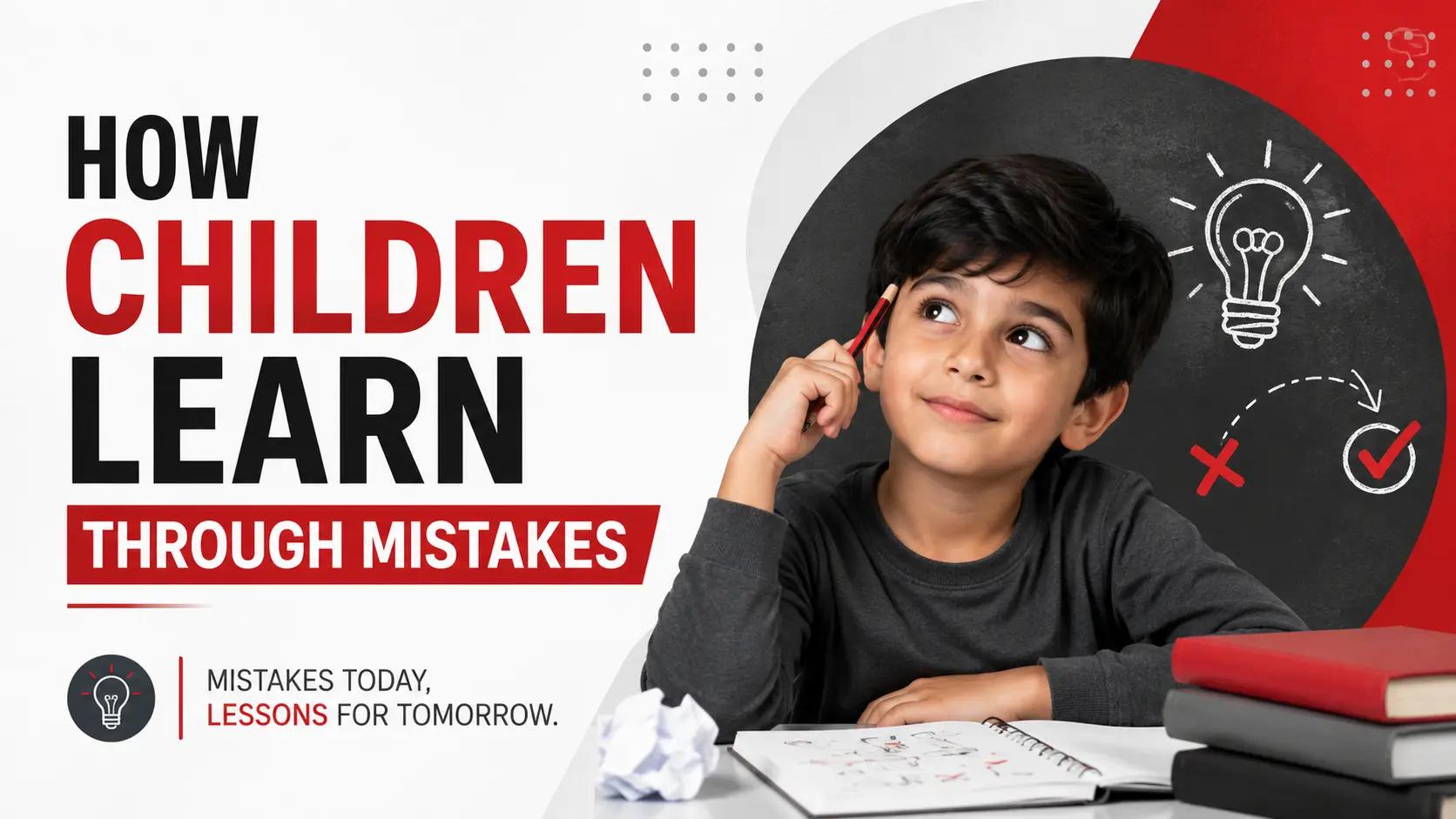
Every child makes mistakes while learning. Whether it is spelling a word incorrectly, solving a math problem the wrong way, or forgetting instructions, mistakes are a natural part of the learning process. Instead of seeing errors as failures, parents and educators should view them as valuable opportunities for growth. When children are encouraged to learn from their mistakes, they develop resilience, confidence, and problem-solving skills that prepare them for lifelong success.
Why Mistakes Are Essential for Learning
Children are naturally curious. They explore, experiment, and discover the world around them through trial and error. Each mistake helps the brain build stronger connections by identifying what works and what does not. This process strengthens understanding and improves memory retention far more effectively than simply memorizing answers.
A classroom that welcomes mistakes creates a positive learning environment where children feel safe to ask questions, try new ideas, and challenge themselves without the fear of being judged. This confidence encourages active participation and helps students develop a genuine love for learning.
Building Confidence Through Trial and Error
Many children hesitate to answer questions because they fear giving the wrong answer. However, when teachers appreciate effort instead of focusing only on correct answers, students become more willing to participate. They begin to understand that learning is a journey rather than a competition.
Mistakes teach children perseverance. Instead of giving up after facing challenges, they learn to analyze what went wrong, adjust their approach, and try again. These experiences help build emotional resilience and prepare them to overcome obstacles both inside and outside the classroom.
Developing Critical Thinking and Problem-Solving Skills
One of the greatest benefits of learning through mistakes is the development of critical thinking. Rather than simply memorizing facts, children learn to evaluate situations, identify errors, and discover better solutions.
Modern education emphasizes
- experiential learning,
- child-centered education,
- growth mindset,
- critical thinking skills,
- activity-based learning,
- problem-solving abilities,
- and holistic development
because these approaches encourage independent thinking. When students reflect on their mistakes, they become more analytical, creative, and confident decision-makers.
Teachers can support this process by asking reflective questions such as:
- What did you learn from this mistake?
- How would you solve it differently next time?
- What strategy worked better?
These conversations help children understand that every mistake carries an important lesson.
The Role of Parents and Teachers
Parents and teachers play a crucial role in shaping a child's attitude toward mistakes. Instead of criticizing errors, they should celebrate effort, persistence, and improvement. Positive encouragement motivates children to continue learning without fear.
Simple actions such as praising hard work, discussing challenges openly, and sharing personal learning experiences help children realize that everyone makes mistakes, including adults. This creates a supportive environment where children develop confidence and curiosity.
Preparing Children for Lifelong Success
Success in today's world depends not only on academic knowledge but also on adaptability, creativity, communication, and resilience. Children who learn to embrace mistakes become confident learners who are better equipped to face future challenges. They develop the courage to innovate, solve problems independently, and continue learning throughout their lives.
Nurturing Confident Learners for Tomorrow
In a rapidly changing world, education should inspire children to explore, question, and grow through meaningful experiences rather than simply memorizing information. Learning from mistakes helps students build resilience, strengthen critical thinking, and develop the confidence to take on new challenges.
At Ieken Future School, every child is encouraged to view mistakes as stepping stones to success. Through engaging classroom experiences, activity-based learning, and concept-focused teaching, students are empowered to think independently, embrace challenges, and discover their true potential. By fostering curiosity, confidence, creativity, and lifelong learning habits, the school prepares children to become capable, compassionate, and future-ready individuals.