
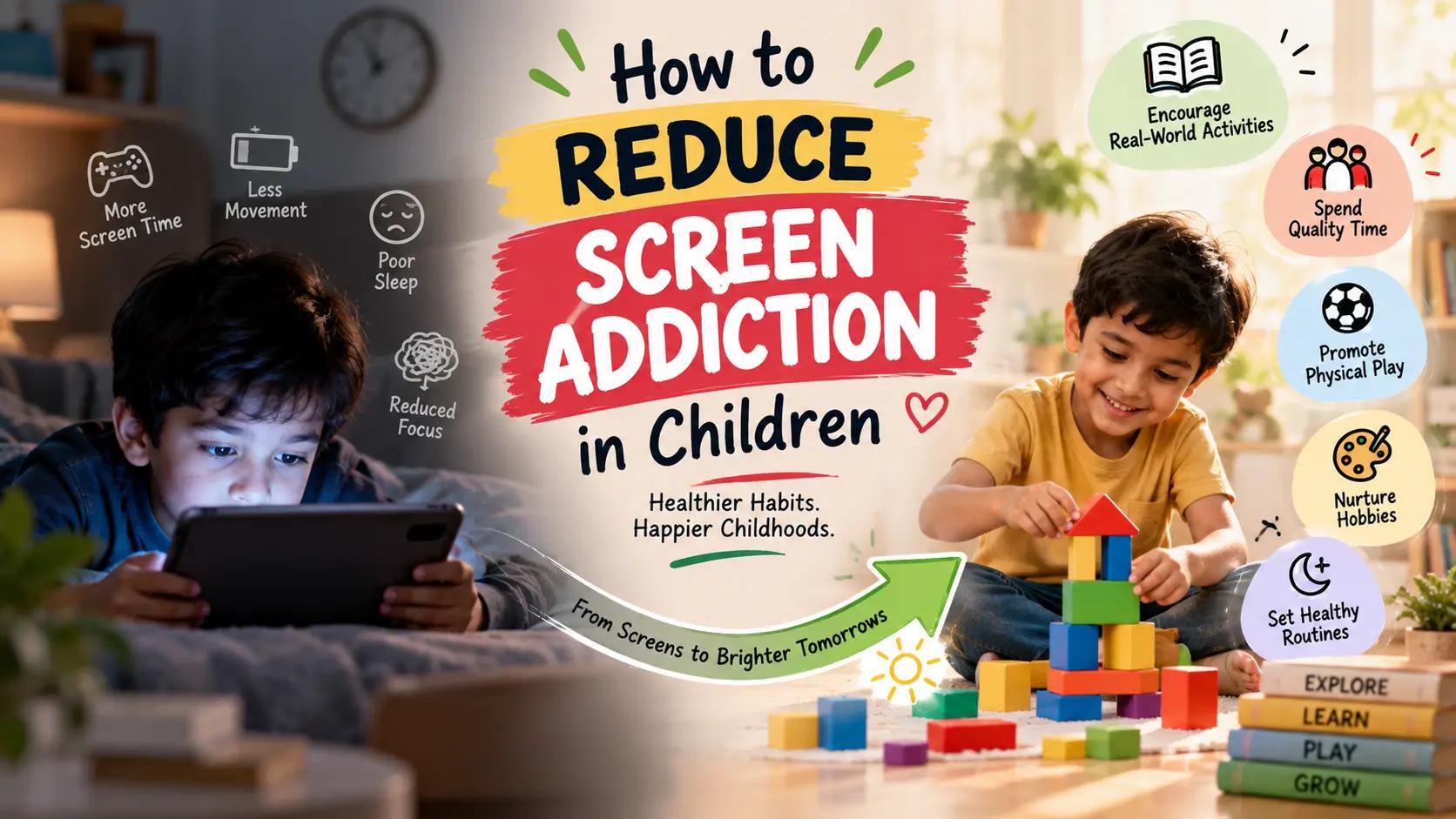
Screens are now a regular part of children’s lives, from online learning and educational videos to games and social media. While technology can support learning, excessive screen time may reduce opportunities for physical activity, creativity, social interaction, and focused learning. Helping children develop a healthy relationship with screens starts with simple and consistent habits at home and school.
Understand Why Children Spend More Time on Screens
Before reducing screen time, parents should understand what attracts children to screens. Games, videos, social media, and entertainment apps are designed to keep users engaged. Children may naturally prefer these activities because they offer instant entertainment and stimulation.
Instead of suddenly taking screens away, parents can gradually introduce alternative activities that are equally engaging and meaningful.
Set Clear and Consistent Screen-Time Limits
One of the most practical ways to manage screen use is to create clear boundaries. Parents can establish specific times for entertainment, study, meals, and sleep.
A consistent screen time routine for children helps them understand when devices are appropriate and when they should be put away. Keeping phones and tablets away during meals and before bedtime can also help create healthier daily habits.
Encourage Active and Creative Alternatives
Children are less likely to constantly seek screens when they have interesting alternatives. Outdoor games, reading, drawing, puzzles, music, crafts, and imaginative play can keep children engaged while developing different skills.
Parents looking for how to reduce screen time for kids can start by introducing one or two screen-free activities each day instead of trying to change every habit immediately.
Make Family Time Screen-Free
Family routines can play an important role in reducing excessive device use. Having screen-free meals, family conversations, outdoor walks, or board-game evenings gives children opportunities to interact and communicate.
These activities can strengthen relationships while helping children understand that entertainment does not always need to involve a digital device.
Teach Children to Use Technology Responsibly
The goal should not always be to eliminate screens completely. Children need to learn how to use technology responsibly because digital tools are an important part of modern education and everyday life.
Parents and educators can explain the difference between productive screen use, such as educational activities and online learning, and passive entertainment. Teaching healthy screen habits for children can help them gradually develop self-control and better digital routines.
Create a Balanced Learning Environment
Schools also have an important role in helping children maintain balance. Learning should include opportunities for discussion, movement, creativity, hands-on activities, reading, and collaborative work alongside appropriate technology use.
Helping Children Build Healthier Digital Habits
Reducing screen addiction is not about completely removing technology from a child's life. It is about creating a healthy balance between digital activities and real-world experiences. With consistent routines, engaging alternatives, family involvement, and supportive learning environments, children can develop better relationships with technology.
Building Balanced, Confident and Curious Learners
At IEKEN Future School, the focus extends beyond academics to creating an environment where children can explore, interact, create, and learn through meaningful experiences. By encouraging active participation, creativity, communication, and balanced technology use, children can develop habits that support both their present learning and future growth.