
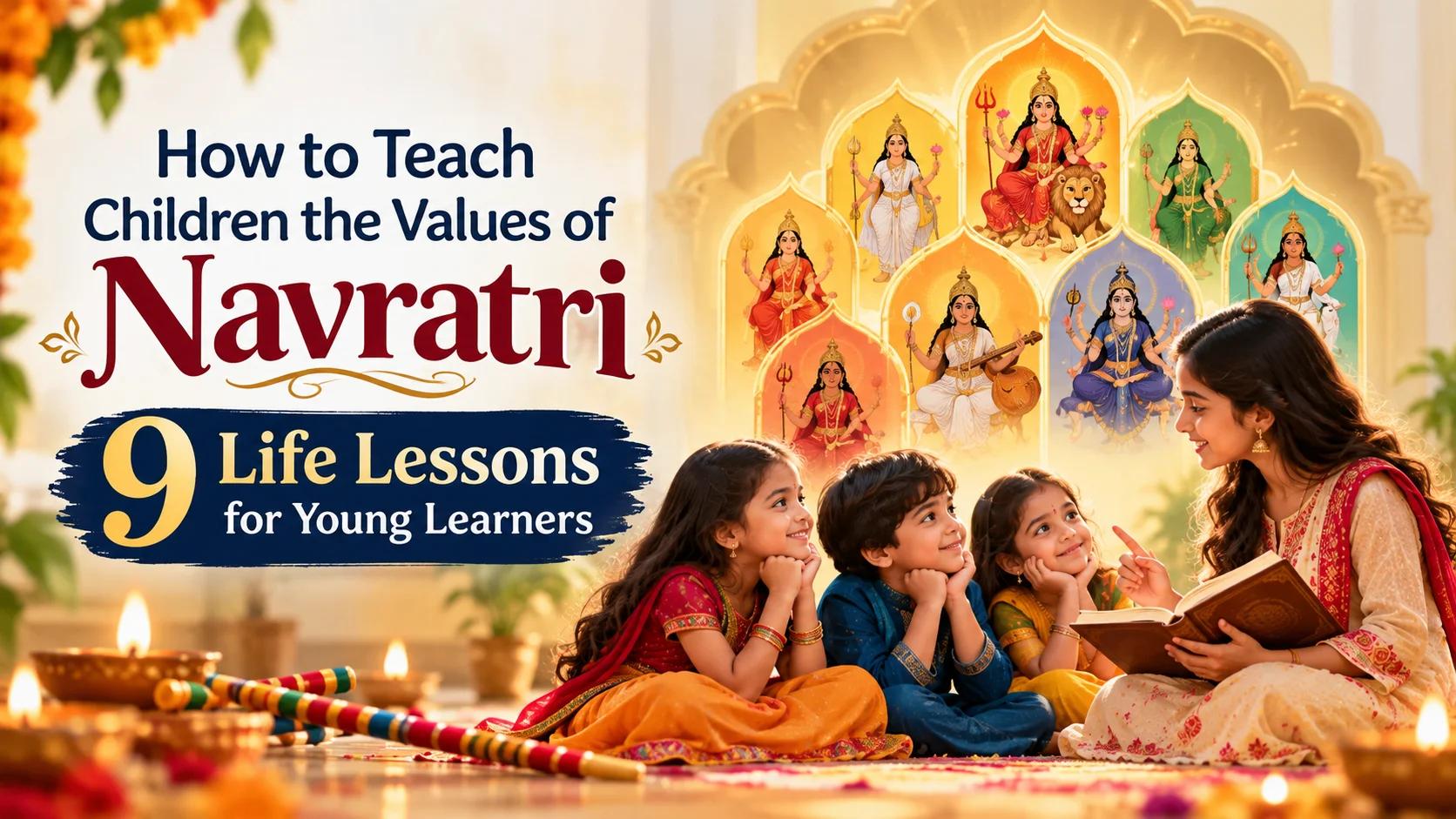
Navratri is more than a festival of devotion, dance, and celebration. It teaches children important values such as kindness, courage, respect, honesty, and gratitude. Parents and teachers can use this nine-day festival to help young learners understand good habits and apply them in everyday life.
Teaching children the values of Navratri through stories, classroom activities, and real-life examples makes learning meaningful and enjoyable.
1. Courage to Face Challenges
Navratri celebrates Goddess Durga’s strength and victory over evil. Children can learn to face difficulties confidently, stand up for what is right, and believe in themselves.
2. Respect for Everyone
The festival honours feminine power and the importance of women in society. Teach children to respect parents, teachers, classmates, and people from different backgrounds.
3. Kindness and Compassion
Encourage children to help others, share their belongings, and care for animals. Small acts of kindness help them develop empathy and build healthy relationships.
4. Truthfulness and Honesty
Navratri reminds children that good ultimately triumphs over evil. Through stories and everyday examples, teachers can explain why honesty and telling the truth are essential values.
5. Patience and Self-Discipline
The nine days of Navratri encourage devotion and discipline. Children can practise patience by waiting for their turn, following routines, completing tasks, and listening carefully.
6. Gratitude for What We Have
Help children appreciate their family, education, food, and opportunities. Simple gratitude activities, such as sharing what they are thankful for, can encourage a positive attitude.
7. Teamwork and Cooperation
Navratri celebrations often bring communities together through Garba, Dandiya, and cultural activities. Group projects and festival-based classroom activities teach children cooperation and the importance of working together.
8. Equality and Inclusiveness
Explain that every individual deserves equal respect and opportunities. Encourage children to include everyone in games, group discussions, and celebrations, regardless of their differences.
9. The Importance of Good Choices
The victory of good over evil offers a valuable lesson about decision-making. Children can learn to choose honesty over cheating, kindness over bullying, and responsibility over carelessness.
How Can Schools Make Navratri Learning Meaningful?
Schools can introduce value-based education for children through storytelling, role-play, drawing competitions, group discussions, and festive celebrations. These activities help students connect cultural traditions with practical life lessons.
Teachers can also encourage children to reflect on one positive action each day during Navratri. This simple practice helps turn festival lessons into lasting habits.
Nurturing Young Minds Through Cultural Values
Education becomes more meaningful when children learn not only academic concepts but also the values that guide their everyday decisions. Cultural celebrations like Navratri offer opportunities to develop empathy, confidence, discipline, and respect through engaging experiences.
At IEKEN Future School, learning can connect traditional values with modern teaching approaches through interactive activities, collaborative learning, and opportunities for independent thinking. By encouraging children to understand cultural traditions and practise positive behaviours, the school environment supports their social, emotional, and academic growth.