
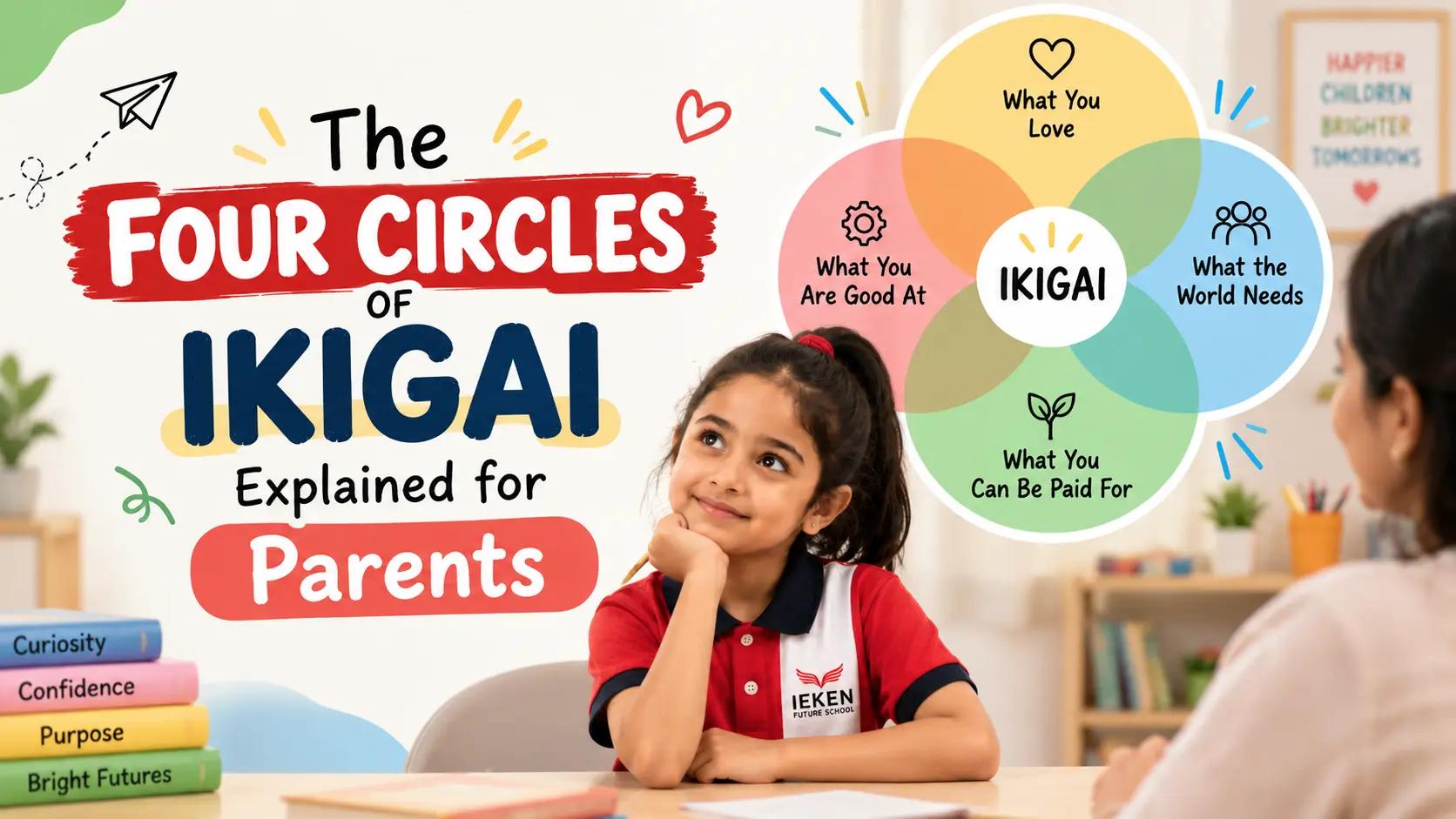
For parents, understanding a child’s interests, strengths, and sense of purpose can be more valuable than focusing only on academic performance. The Japanese concept of Ikigai provides a simple framework for helping children explore what they love, what they are good at, what the world needs, and what opportunities may suit them in the future.
While Ikigai is often associated with careers, its four circles can also support holistic child development from an early age.
1. What Your Child Loves
The first circle focuses on a child’s interests, enjoyment, and passions.
Parents can observe:
- What activities make their child excited?
- What does the child choose to do during free time?
- Does the child enjoy drawing, music, sports, reading, technology, or nature?
- Which activities keep the child curious and engaged?
- What topics does the child naturally ask questions about?
Parents should give children opportunities to explore different activities instead of deciding their interests for them.
Activity-based learning for children can be particularly helpful because children discover their interests through doing, experimenting, creating, and experiencing.
2. What Your Child Is Good At
The second circle focuses on abilities and natural strengths.
A child's strengths may include:
- Creativity and imagination
- Communication skills
- Problem-solving abilities
- Leadership
- Teamwork
- Observation
- Empathy
- Logical thinking
- Adaptability
Academic marks are only one way of understanding a child's abilities. Parents should recognize different forms of intelligence and encourage children to develop their unique strengths.
Skill-based learning helps children build confidence and understand what they do well.
3. What the World Needs
The third circle introduces children to purpose, empathy, and contribution.
Parents can help children understand the importance of helping others through:
- Caring for plants and animals
- Helping classmates or siblings
- Participating in group activities
- Learning about environmental responsibility
- Sharing and cooperating with others
- Taking part in community-oriented activities
This connects with value-based education, which teaches children that success is not only about personal achievement but also about making a positive contribution to society.
4. What Can Create Future Opportunities
The fourth circle connects a child's interests and abilities with possible future opportunities.
For young children, this does not mean choosing a career at an early age.
Instead, parents can help children:
- Explore different subjects and activities
- Understand how skills can be used in different fields
- Develop problem-solving and communication skills
- Become comfortable with change
- Discover multiple possibilities for the future
- Build confidence in making their own choices
For example, a child who enjoys building things might eventually explore engineering, architecture, design, or technology.
How Parents Can Help Children Discover Their Ikigai
The four circles of Ikigai should not be treated as a checklist. They can instead become a framework for everyday conversations and exploration.
Parents can:
- Ask children what they enjoyed learning that day.
- Encourage them to try new activities.
- Notice their natural strengths.
- Allow them to make age-appropriate choices.
- Appreciate effort instead of focusing only on results.
- Encourage kindness, teamwork, and responsibility.
- Avoid comparing their interests or abilities with other children.
For parents looking for the best school in Kondapur, an environment that encourages curiosity, creativity, collaboration, and independent thinking can support this journey.
Nurturing Purpose Through Meaningful Education
At Ieken Future School, children can be encouraged to explore their interests, recognize their strengths, develop empathy, and understand different possibilities for their future. Meaningful learning experiences can help children become more confident, curious, and adaptable.