
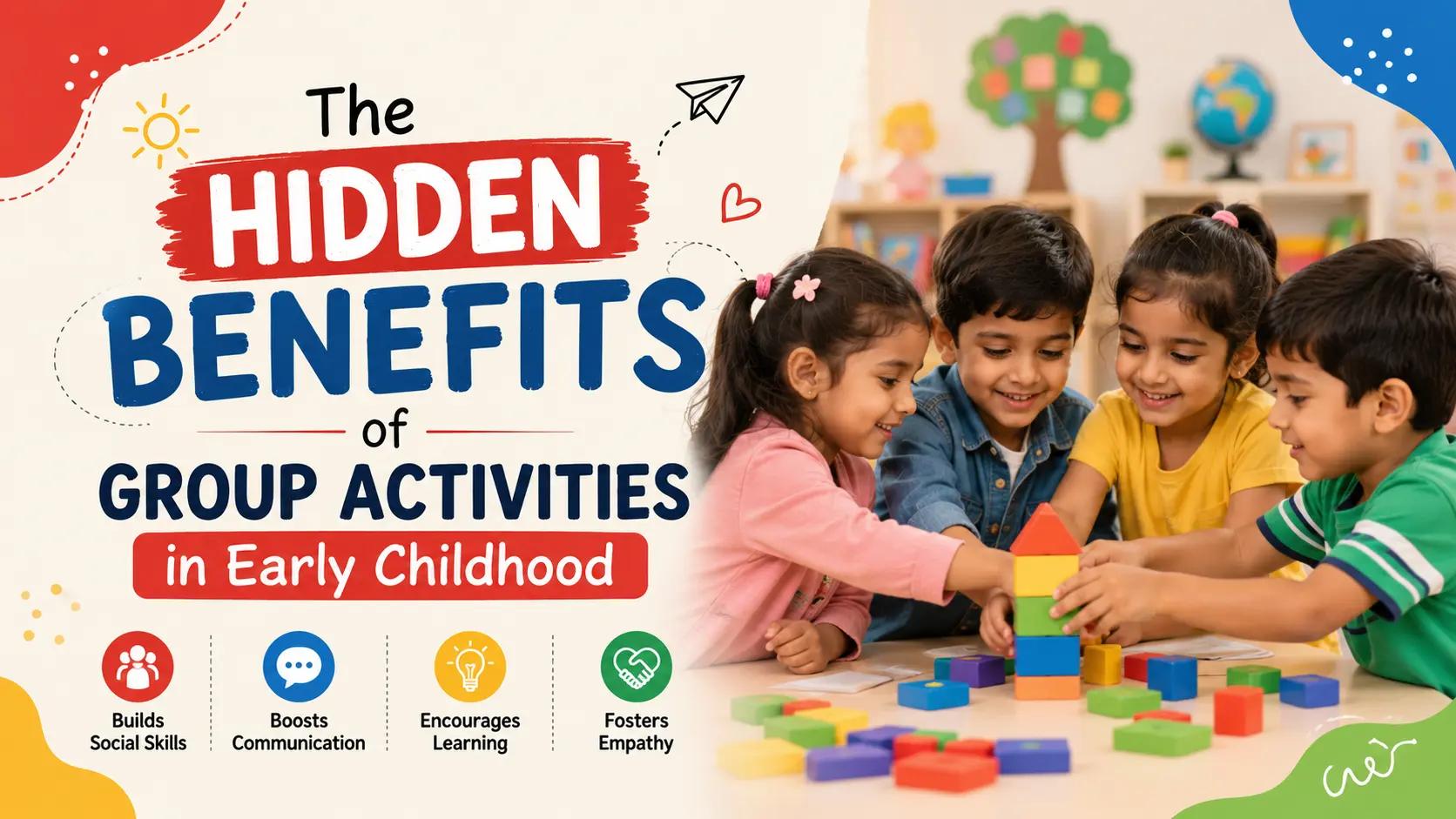
Early childhood is an important stage in a child’s development. During these early years, children learn not only academic concepts but also how to communicate, cooperate, express emotions, and interact with others. While individual learning has its own value, group activities in early childhood provide children with meaningful opportunities to learn through collaboration, play, and shared experiences.
Developing Social Skills Through Interaction
One of the most valuable benefits of group activities is the development of social skills. When children participate in group games, art projects, storytelling sessions, or classroom activities, they learn how to share, take turns, listen, and respect others. These simple experiences help children understand how to interact positively with their peers.
For parents searching for social skills activities for kids, group-based learning provides a natural way for children to practice communication and cooperation while enjoying the learning process.
Encouraging Communication and Teamwork
Group activities create regular opportunities for children to express their ideas and listen to different viewpoints. Whether they are completing a classroom project or playing a team game, children learn that communication is essential when working towards a common goal.
These experiences support communication skills in early childhood and help children become more comfortable speaking, asking questions, and sharing their thoughts. Teamwork also teaches children that everyone can contribute in different ways.
Supporting Emotional Development
Children experience many emotions while interacting with others. They may feel excited when their team succeeds, disappointed when something does not go as planned, or frustrated when they have to wait for their turn. With appropriate guidance, these situations become valuable learning experiences.
Regular interaction with peers can support emotional development in children by teaching them patience, empathy, self-control, and an understanding of other people’s feelings. These emotional skills can influence how children build relationships as they grow.
Building Creativity and Problem-Solving Skills
Group activities often encourage children to think beyond one solution. When working together on a drawing, building activity, puzzle, story, or simple classroom challenge, children are exposed to different ideas and approaches.
This makes activity-based learning for children an effective way to encourage creativity and problem-solving. Instead of simply receiving information, children actively explore ideas, make decisions, and learn from the outcomes of their choices.
Increasing Confidence and Independence
Participating in group activities can also improve a child’s confidence. When children are given opportunities to contribute ideas, complete tasks, help classmates, or take small leadership roles, they begin to recognize their own abilities.
The benefits of group activities for children therefore extend beyond social interaction. They can help children become more confident, responsible, independent, and willing to participate in new experiences.
Making Learning More Meaningful
Group activities can transform the classroom into an interactive learning environment. Children learn from teachers as well as from their peers, making every activity an opportunity to discover something new. Shared experiences can also make lessons more engaging and memorable.
Growing Together Through Meaningful Learning
At Ieken Future School, early education can go beyond academic learning by creating opportunities for children to collaborate, communicate, explore, and express themselves. Through engaging classroom experiences and child-centered activities, children can develop essential social, emotional, creative, and communication skills alongside their academic foundation.
By encouraging children to learn together from an early age, meaningful group experiences can help nurture confident, empathetic, curious, and capable learners who are better prepared for the challenges and opportunities of the future.