
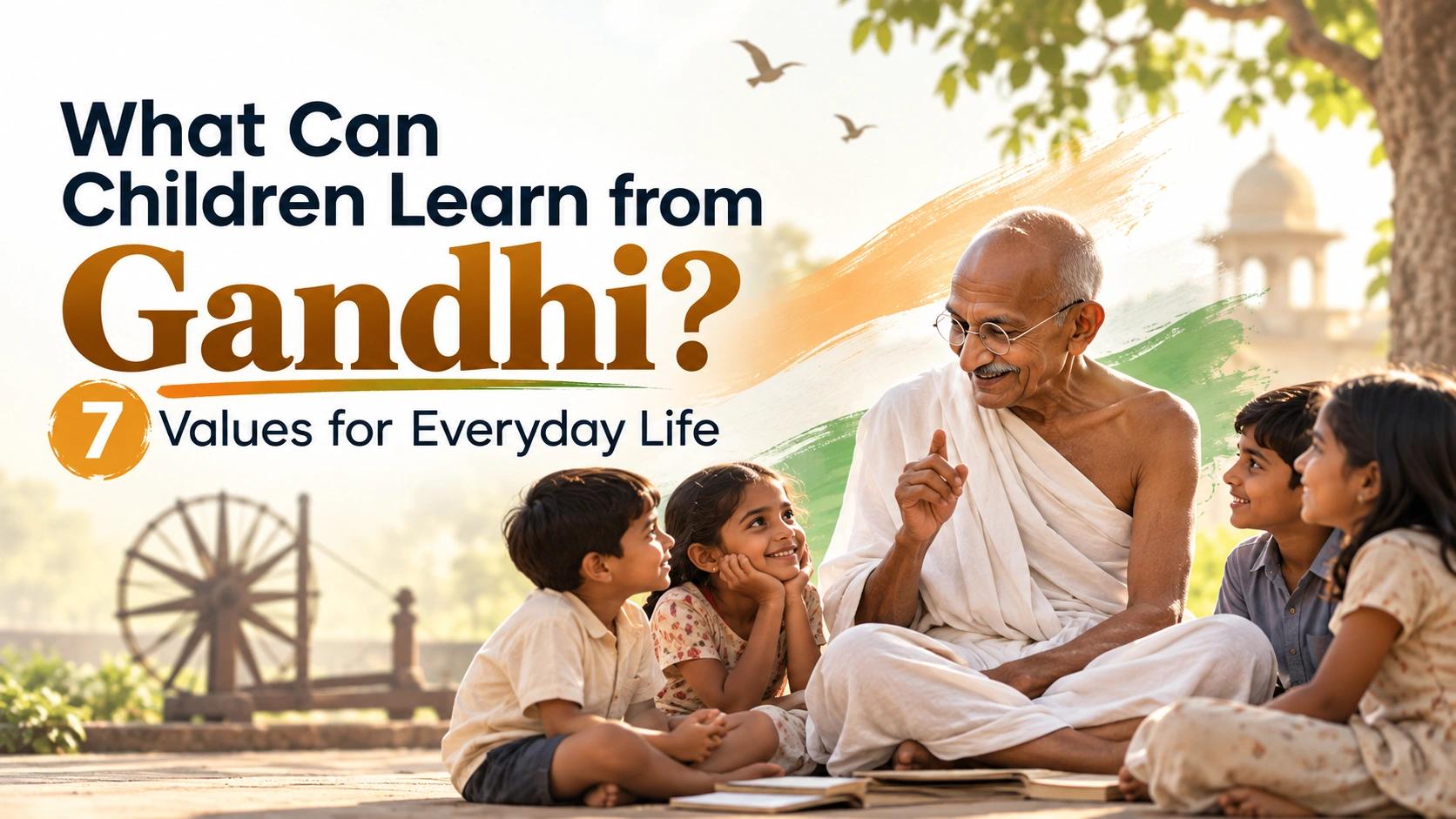
Mahatma Gandhi’s life offers children valuable lessons that go beyond history books. His principles of truth, kindness, simplicity, and responsibility can help young learners develop strong character and make thoughtful choices in everyday situations. These values are especially meaningful in childhood, when children are learning how to understand themselves and interact with others.
1. Truthfulness Builds Trust
Gandhi strongly believed in the importance of truth. Children can learn that being honest, even when it is difficult, helps build trust with parents, teachers, and friends. Encouraging children to speak the truth and accept their mistakes can help them become responsible and confident individuals.
2. Non-Violence Teaches Respect
One of Gandhi’s most important principles was non-violence. For children, this value can be understood as choosing peaceful ways to solve disagreements. Instead of fighting or hurting others, children can learn to communicate, listen, and find solutions respectfully.
3. Kindness Makes a Difference
Gandhi believed that helping others was an important part of life. Simple actions such as sharing, helping a classmate, respecting elders, or caring for animals can teach children empathy. These everyday experiences help create a kinder and more supportive environment.
4. Discipline Creates Good Habits
Gandhi followed a disciplined lifestyle and believed in self-control. Children can apply this lesson through simple habits such as completing homework on time, keeping their belongings organized, following routines, and balancing study with play. Good discipline can gradually become a foundation for lifelong success.
5. Simplicity Helps Children Value What Matters
In a world filled with constant advertisements and material choices, Gandhi’s simple lifestyle can teach children to appreciate what they already have. Children can learn to avoid unnecessary waste, take care of their belongings, and understand that happiness does not always depend on owning more things.
6. Courage Means Doing What Is Right
Courage is not only about facing danger. Gandhi demonstrated the courage to stand for what he believed was right. Children can learn to speak up respectfully, make responsible decisions, and stand against unfair behaviour. This can help develop confidence and strong moral values.
7. Responsibility Starts with Small Actions
Gandhi encouraged people to contribute to society. Children can learn responsibility through everyday activities such as keeping their classroom clean, helping at home, caring for school materials, and completing tasks independently. These small actions teach children that everyone has a role to play.
Helping Children Grow with Strong Values
Parents and educators looking for values-based education for children can use Gandhi’s principles as practical lessons rather than simply teaching them as historical facts. Connecting these values with classroom activities, stories, discussions, and real-life situations can make learning more meaningful.
Learning Beyond the Classroom
At Ieken Future School, education can be about more than academic knowledge. Through meaningful activities and an engaging learning environment, children can develop qualities such as empathy, responsibility, confidence, critical thinking, and respect for others.
By connecting everyday learning with timeless values, Ieken Future School encourages children to become thoughtful, independent, and socially responsible individuals. These qualities can help them face the future with confidence while understanding the importance of kindness, honesty, discipline, and responsible action.