
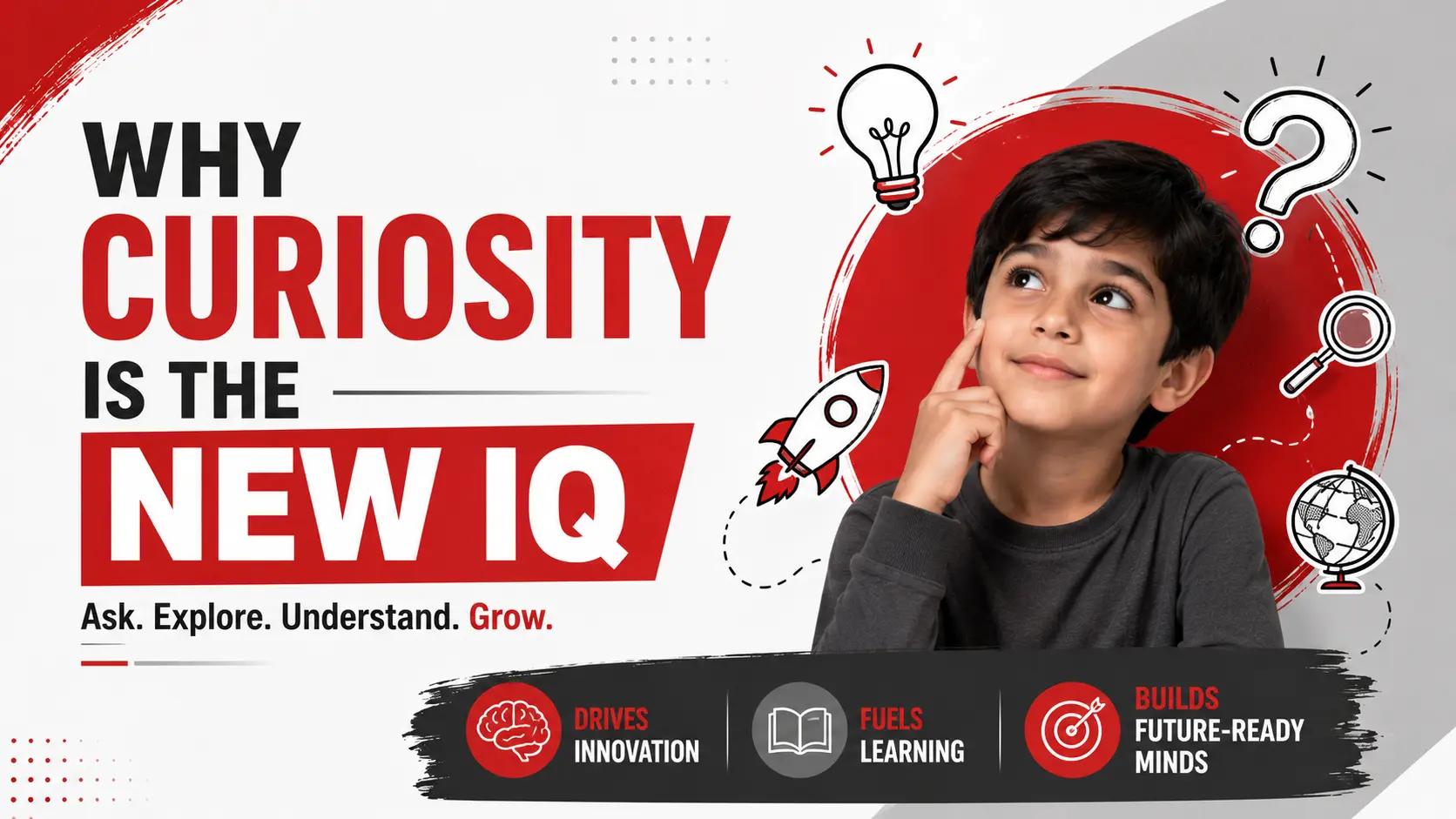
For generations, intelligence was often measured through IQ scores, academic marks, and the ability to remember information. However, the world is changing rapidly. With technology, artificial intelligence, and information easily available, simply knowing facts is no longer enough. Today, the ability to ask questions, explore ideas, and keep learning is becoming more valuable than memorization. This is why curiosity is the new IQ and one of the most important skills children can develop.
Why Is Curiosity Important for Children?
Curiosity encourages children to explore the world around them. When a child asks “why,” “how,” or “what if,” they are not just seeking answers. They are developing the ability to think deeply and understand concepts. Curiosity-driven learning helps children become active participants in their education instead of passive listeners.
A curious child naturally wants to discover new information. This interest can improve critical thinking skills in children, problem-solving abilities, creativity, and independent learning. Instead of simply memorizing answers for an examination, children learn to understand how and why things work.
Curiosity and the Future of Education
The future of education is moving beyond traditional classroom learning. Future-ready education focuses on developing skills that children will need in a constantly changing world. Creativity, communication, collaboration, adaptability, and critical thinking are becoming just as important as academic knowledge.
Curiosity plays a central role in developing these abilities. When students are encouraged to ask questions and explore different possibilities, they learn to approach challenges with confidence. This approach also supports activity-based learning, where children understand concepts through experiences, discussions, experiments, and practical activities.
How Curiosity Builds Critical Thinking Skills
Curiosity encourages children to look beyond simple answers. When they investigate a question, compare ideas, and search for solutions, they learn to think logically and independently. These experiences help develop critical thinking in children and prepare them to make informed decisions.
For example, a child who is curious about how plants grow may observe, ask questions, conduct simple experiments, and draw conclusions. This process transforms everyday curiosity into meaningful learning.
How Schools Can Encourage Curiosity
A supportive learning environment can make a significant difference in a child's development. Teachers can encourage curiosity by welcoming questions, using real-life examples, introducing interactive activities, and allowing students to explore different solutions.
Child-centred education gives learners the freedom to participate, express their ideas, and learn through discovery. When children feel comfortable making mistakes and asking questions, they become more confident and engaged learners.
The Role of Parents in Nurturing Curiosity
Parents can also nurture curiosity at home by encouraging conversations, reading together, exploring new subjects, and allowing children to investigate their interests. Simple questions about nature, technology, stories, or everyday activities can become valuable learning opportunities.
Rather than immediately providing every answer, parents can encourage children to think, explore, and find possible solutions. This helps develop independent learning habits and a lifelong interest in discovery.
Building Lifelong Learners for the Future
The greatest advantage of curiosity is that it does not stop with school. A curious child becomes an adult who continues to learn, adapt, and grow. In a world where knowledge and technology are constantly evolving, a lifelong love for learning can be more powerful than simply having a high IQ.
Nurturing Curiosity for a Brighter Future
Modern education should focus on developing thinkers, explorers, and lifelong learners. At Ieken Future School, learning goes beyond textbooks by encouraging children to ask questions, explore concepts, and understand the world through meaningful experiences. Through interactive learning, creative activities, and a supportive environment, students are encouraged to develop curiosity, critical thinking, confidence, and independent learning skills. By nurturing the natural desire to discover and learn, the school helps children become adaptable, confident, and future-ready individuals prepared for an ever-changing world.