
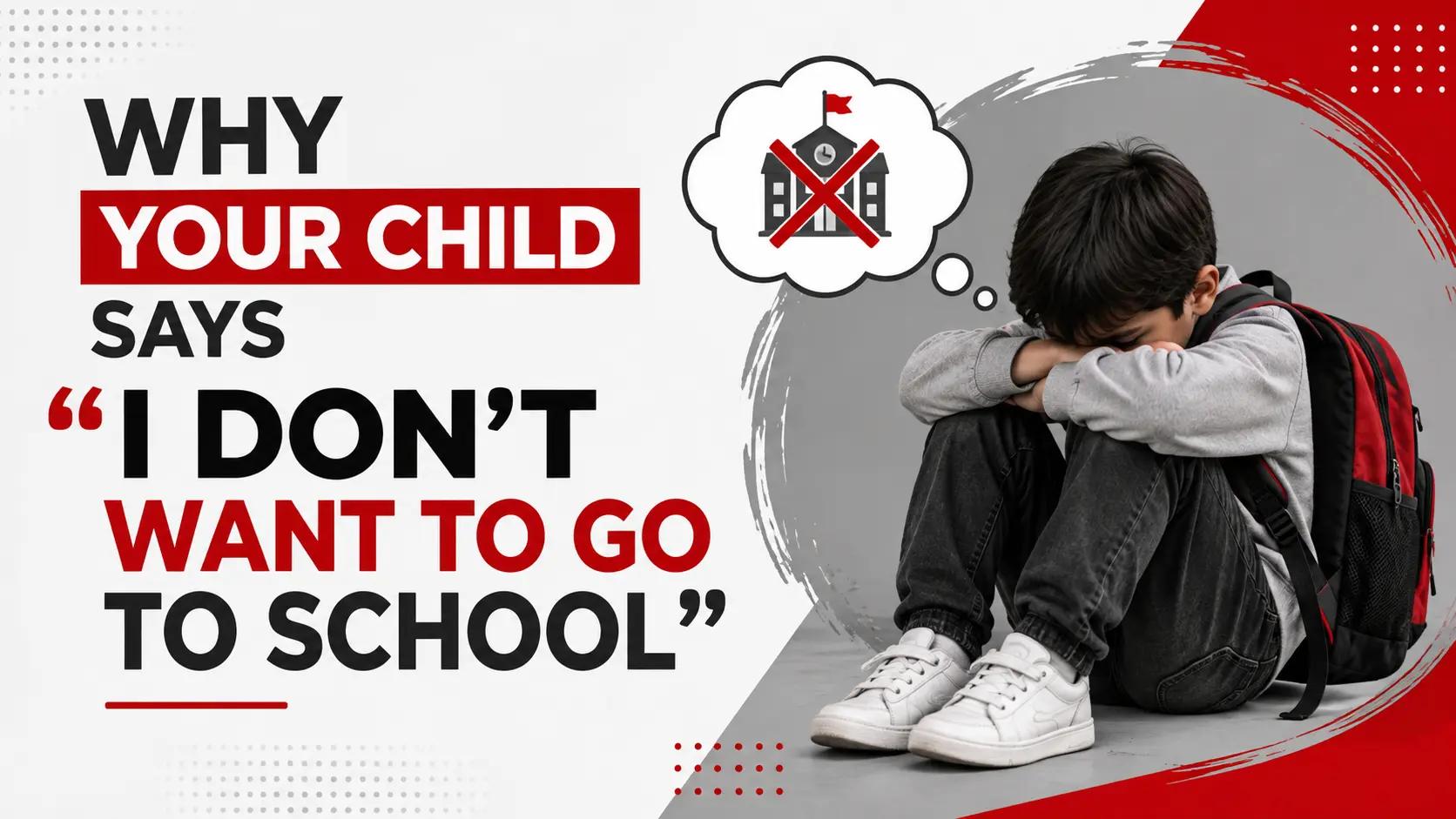
Hearing your child say, "I don't want to go to school," can be worrying for any parent. While it may seem like an excuse to skip classes, these words often reflect emotions children struggle to express. Understanding the reason behind this behavior is the first step toward helping your child enjoy learning again.
School should be a place where children feel safe, supported, and excited to learn. Instead of forcing them to attend, parents should patiently understand what is making them unhappy.
Common Reasons Children Avoid School
There are many reasons why children may not want to go to school. Young children may experience separation anxiety, while others may find it difficult to adjust to a new classroom or make friends. Academic pressure, fear of making mistakes, or difficulty understanding certain subjects can also reduce their interest in learning.
Sometimes, children may feel stressed because of bullying, changes at home, or low self-confidence. Poor sleep, unhealthy eating habits, and too much screen time can also affect their mood and willingness to attend school. Identifying these signs early helps parents provide the right support.
How Parents Can Help
If your child refuses to go to school, stay calm and encourage open conversations. Ask simple questions such as, "What happened today?" or "Is something making you uncomfortable?" Listening without judgment helps children express their feelings honestly.
Creating a healthy daily routine with enough sleep, nutritious meals, and regular outdoor play can also improve their emotional well-being and readiness for school.
Making Learning More Enjoyable
Children learn best when education is engaging and meaningful. Schools that encourage activity-based learning, interactive lessons, creative projects, and real-world experiences make learning enjoyable while improving communication, creativity, and critical thinking skills.
Learning Beyond the Classroom
Education is not limited to textbooks. Sports, cultural events, music, dance, art, science activities, and teamwork-based projects help children discover new interests and develop confidence. These activities improve leadership, collaboration, and problem-solving skills while making school a place children look forward to every day.
A balanced learning environment that combines academics with extracurricular activities helps children become confident, well-rounded individuals.
When Should Parents Be Concerned?
Occasional reluctance is normal, but repeated refusal to attend school, unexplained stomach aches, frequent anxiety, or sudden behavioral changes should not be ignored. Speaking with teachers or school counselors early can help identify challenges and find effective solutions.
Every child learns differently. With patience, encouragement, and the right support, children can regain their confidence and develop a positive attitude toward school.
Nurturing a Love for Learning
A positive school experience goes beyond academic success. When children feel valued, supported, and encouraged to explore their interests, they become more confident and motivated to learn. At Ieken Future School, education combines strong academics with interactive learning, sports, cultural activities, and hands-on experiences to make every school day meaningful. By fostering curiosity, creativity, confidence, and essential life skills, the school helps children become happy, independent, and future-ready learners who are prepared to succeed in an ever-changing world.